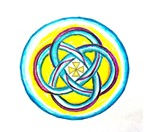
Divine Image
- MPadilla
- Aug 22, 2025
- 2 min read

Below is the 22nd in the August Catholic Social Teaching series: Divine Image
Human dignity rests on the biblical statement in Genesis 1 that humans in a unique manner are the image of God. This raises the question how are we an image of God. St. Augustine and other church fathers gave us the answer which is by being created with faculties of memory, understanding and free will. We possess these in ways that other animals do not.
Teresita Scully, MTS
We often hear about our free will, a gift from God. I wonder how many of us stop and think about our free will?
Here are some questions for you to think about:
Do we understand how our intellect relates to free will? For example, how do we use the power of reason when making a decision or plan?
Do we acknowledge the impact our memories have on the decisions or choices we make?
Do we appreciate God’s grace of free will that allows us to use our intellect and memories in all aspects of our lives?
Here are some Bible verses on memory:
Isaiah 46:9: “remember the former things, those long ago: I am God, there is no other; I am God, there is none like me.”
Jeremiah 29:11: For I know well the plans I have in mind for you—oracle of the LORD—plans for your welfare and not for woe, so as to give you a future of hope.
2Peter 3:9: The Lord does not delay his promise, as some regard “delay,” but he is patient with you, not wishing that any should perish but that all should come to repentance.
Philippians 4:19: Keep on doing what you have learned and received and heard and seen in me. Then the God of peace will be with you.
“Memory is one of the internal senses and is inherent to the sensitive soul. It plays a crucial role in retaining and recalling sensory experiences. Memory is closely linked to the imagination. The imagination retains the images of past experiences, and memory stores these images for future recollection. …”
“…The intellect, particularly the rational soul, is the highest element of the soul. It is responsible for abstract reasoning, contemplation, and understanding abstract concepts beyond sensory experience. …”
“…Concerning free will, human beings have the ability to choose, and act based on their own volition. … Moral actions are a result of the will pursuing what is perceived as good, and moral virtues are habits that align the will with reason.”
Read more here.
Catechism of the Catholic Church: 1731 Freedom is the power, rooted in reason and will, to act or not to act, to do this or that, and so to perform deliberate actions on one's own responsibility. By free will one shapes one's own life. Human freedom is a force for growth and maturity in truth and goodness; it attains its perfection when directed toward God, our beatitude.
I encourage you to watch the video here


Comments